Skip site navigation
University of Maryland Division of Research
Who We Are Capabilities Partnerships Resources News
Analytical Nuclear Magnetic Resonance (NMR) Service & Research Center Biomolecular Nuclear Magnetic Resonance (NMR) Facility Biosciences Cores: Genomics, Imaging, and Flow Cytometry BioWorkshop Brain & Behavior Institute - Advanced Genomic Technologies Core CALCE Test Services and Failure Analysis Laboratory Center For Innovative Biomedical Resources (CIBR) Clarice Smith Performing Arts Center Daikin Energy Innovation Lab DLAR Imaging Core Exposome Small Molecule Core Facility Glenn L. Martin Wind Tunnel Herschel S. Horowitz Center for Health Literacy KIT-Maryland MEG Lab Maryland Fire and Rescue Institute (MFRI) Maryland NanoCenter Maryland Neuroimaging Center Mass Spectrometry Facility Michelle Smith Collaboratory for Visual Culture Neutral Buoyancy Research Facility (NBRF) Surface Analysis Center The Laboratory for Biological Ultrastructure The University of Maryland Center for Health Equity The University of Maryland Prevention Research Center X-ray Crystallographic Center (XCC)
Africa Through Language and Area Studies (ATLAS) Anti-Black Racism Initiative Effective and Equitable Weather Forecasting in a Changing Climate with Machine Learning Encuentros: A University-Community Partnership to Mitigate the Mental Health Crisis for Latino Immigrant Youth Fostering Inclusivity through Technology (FIT) Helping Our Bodies Clear Respiratory Infections The Maryland Safe Drinking WATER Study Modeling the Evolution of Avian Influenza Viruses Music Education for All Through Personalized AI and Digital Humanities Observing Wildfires Through UAVs and Fire Imaging Technologies Programmable Design of Sustainable, All-Natural Plastic Substitutes Racial and Social Justice Research-Practice Partnership Collaborative Remediation of Methane, Water, and Heat Waste Seizing Opportunities: Social Capital, Businesses, and Communities Using Machine Learning to Measure and Improve Equity in K-12 Mathematics Classrooms Water Emergency Team
Accurate, Equitable, and Transparent Genetic Ancestry Inference Advancing Environmental Justice By Evaluating Climate-Ready Urban Street Trees In Historically Redlined Neighborhoods AFTER: A Hospital Violence Intervention Program For Youth Victims of Gunshot Injury An Innovative Intervention to Help Asian American Families Cope with Racism and Mental Health Difficulties Bridging the Gaps in Satellite Observations of Earth Systems to Support Climate Monitoring and Prediction Climate Change and Political Conflict Climate Mitigation and Land-Use Digital Equity Mapping Research and Training Program Establishing a Role for Psilocybin in Frontal Lobe Function Fetal Mammary Stem Cell Programming and Hormone Dysfunction Forecasting Acute Malnutrition for Anticipatory Action Genetic and Lifestyle Risk Factors of Accelerated Brain Aging in Severe Mental Illness How Does Statistical Learning Interact with Socioeconomic Status to Shape Literacy Development? Human Rights Politics and Policies: Lessons from Latin America Increasing Sustainability, Accessibility, and Equity in Urban Mobility with A Self-driving E-Scooter Increasing Participation of Minorities and Women In STEM Through Sports Performance Analytics Research Market Design, Energy Storage, and Interconnection to the U.S. Power Grid On-board Energy Harvesting for Long-endurance Earth Observation UAVs Promoting Youth Mental Wellbeing in Rural Honduras by Engaging Teachers as Catalysts Relating Attitudes on Democracy to Attitudes on Race and Ethnicity An Innovative Approach to Remove Emerging Organic Contaminants from the Environment Role of Mitochondria Dynamics in Opioid Addiction Towards an Early Warning System for Increased Probability of Community Infection by SARS-Cov-2 Variants Understanding the Impact of Wind on Fire Dynamics in Mass-Timber Compartment Visualizing Urban Flooding Due To Climate Change
Search
Who We Are Capabilities Partnerships Resources News
Climate change

New International Fire Safety Consortium Launched to Address Most Urgent Global Challenges

Researchers from UMD, four other universities combine expertise to advance worldwide partnership initiative

January 09, 2020

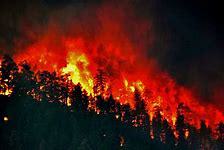
Forested Hilltop engulfed by fire

The University of Maryland has joined forces with international research partners to launch the International Fire Safety Consortium, a new global research initiative that brings together worldwide knowledge and expertise to tackle the most critical fire safety challenges.

The Consortium is led by five leading universities in fire protection engineering: the University of Edinburgh, Lund University, the University of Maryland, the University of Melbourne, and the University of Queensland. The Consortium was established to engage in research, education, and collaboration with industry, government, and non-governmental organizations to help inform policy and practice, protect property, and save lives.

Fires result in hundreds of thousands of deaths and injuries each year with financial losses estimated between 1-2% of global Gross Domestic Product (GDP), a total of approximately $76 billion USD worldwide, according to the Fire Protection Research Foundation. Due to current pivotal trends in global urbanization, climate change, human migration, and social inequality, the need to address fire safety as a humanitarian issue has become urgent.

Research shows that changes in climate lead to warmer and drier conditions and longer fire seasons, resulting in increased area burned and more frequent fire occurrence. Given this trend, combined with the substantial growth of wildland–urban interface (areas where wildland vegetation and urban buildings intermix), fire-related disasters in these areas are predicted to increase. Recent wildland fires in California and the current bushfires in Australia are examples of these major disasters.

Fire is also an increasing threat to individuals living in low- and middle-income communities across the globe, making fire safety a social equality issue. Fire statistics analysis indicates that there are significantly greater fire risks associated with living in social housing (such as Grenfell Tower in London) and belonging to lower income sectors, as well as those living in informal settlements. These higher risks and poorer outcomes are reflected in greater fatalities, injuries that leave many people with permanent disabilities, and damage to properties, infrastructure and businesses, with impacts not just of immediate economic loss, but also on broader societal development.

Researchers from the five university partners bring expertise in multiple areas, including: structural fire safety, fire development modeling, wildfires, industrial fire protection systems, fire technology design, risk analysis, fire performance-based design of buildings, fire and sustainability, sociology of technology, combustion science, fire dynamics, suppression, evacuation, intelligent egress and human behavior in fire, fire service intervention, materials and engineered timber, pyrolysis, gasification, ignition and flame spread. The five universities are all members of Universitas 21, a leading global network of research-intensive universities that empowers its members collaborate across borders and nurture global knowledge exchange.

The early discussions that resulted in the Consortium were made possible by the University of Maryland's Borderless Research Administration Knowledge Exchange (BRAKE) program, which takes a unique, proactive approach to building international research partnerships by sharing knowledge and streamlining administrative functions. The University of Maryland's Division of Research developed the BRAKE training program to help international partner institutions build expertise in research administration best practices.

The International Fire Safety Consortium will hold a workshop at the University of Maryland on February 10-13, 2020, and invite partner organizations in the Washington, DC and mid-Atlantic region to engage in discussions on global fire safety initiatives. For more information, visit the International Fire Safety Consortium website or contact Ted Knight at teknight@umd.edu.