Institutional Grant
Grand Challenges: Global FEWture Alliance
Transformative Food-Energy-Water Solutions to Ensure Community Resilience in a Changing Climate


News
News: Check out the Global FEWture Alliance team website for the latest news
The Climate Resilience Network: UMD Researchers Prepare Marylanders for Extreme Weather, Air Quality Problems
April 22, 2026
Grand Challenges: Global FEWture Alliance
March 11, 2026
UMD Research Links Communication With Farmers’ Support for Solar Power
September 19, 2025
AquaSafe: ‘Doing Good’ in Tanzania
March 27, 2025
In Tanzania, An On-the-Ground View of Farming Struggles, Ambitions
January 31, 2025
Global STEWARDS Program Announces 2025 Cohort
December 9, 2024
Global FEWture Alliance Hosts the Mbeya University of Science and Technology (MUST) Management Team for UMD Visit
September 17, 2024
To Heal the Anacostia, Citizen Scientists Wade Into Troubled Waters
September 9, 2024
Safeguarding Our Salads From the Roots Up
August 29, 2024
Students Deliver Global FEWture Alliance Summer Internship Presentations
August 14, 2024
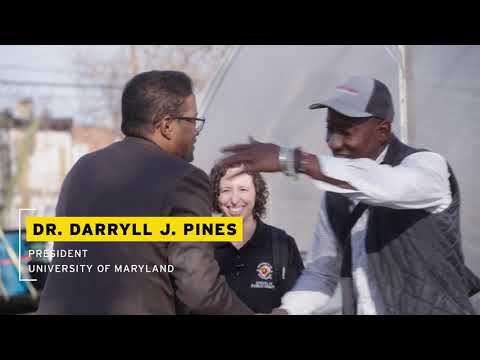
President Pines meets Farmer Chippy and Dr. Rachel Rosenberg Goldstein in the AgriHood
May 1, 2024
Murray Wins Grant for Global Public Health Classrooms Curriculum on Nexus of Food, Energy, and Water Systems
March 28, 2024
On Nepal Research Trip, Graduate Students Strive for Solutions for Food, Energy, Water
January 26, 2024
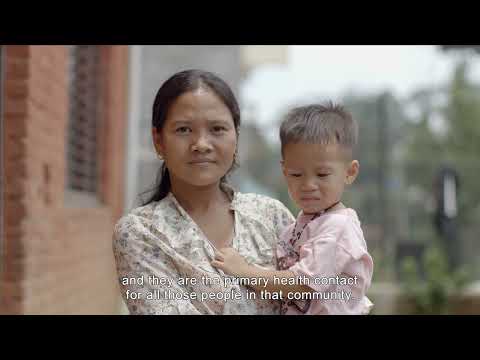
Short Film: The Nepal FEWture Team on Climate and Diarrheal Disease
November 20, 2023
UMD Researchers Help Hyattsville’s Food Forests Look to the ‘FEWture’
September 22, 2023
New UMD Alliance to Develop Sustainable Solutions for Food, Energy, Water Systems
March 13, 2023
Events
Check out the Global FEWture Alliance team website for the latest events
June 2026
Third Annual Global FEWture Alliance Symposium
Nepal
For more information, visit: https://globalfewture.umd.edu/events/annual-symposium
Summary
Climate change, population growth, and urbanization are crippling global food, energy, and water (FEW) systems and harming public health, with low-income communities and people of color bearing the heaviest burdens. There are 1.3 billion people worldwide who are food insecure, 2 billion people who lack access to safe drinking water, and 770 million people who lack access to electricity. These challenges will only grow worse over the next 30 years. By 2050, global food production will need to increase by 70%, 5 billion people will live in water-scarce areas, causing global water demand to increase by 55%, and global energy demand will increase by 50%.
To date, solutions addressing these pervasive challenges have often been siloed and inequitable. Initiatives tend to focus on food production, access to water or access to energy technologies, but often fail to take into consideration all three vital resources along with the required capacity building and educational programs necessary to sustain interventions.
The Global FEWture Alliance—a UMD-based international alliance—is scaling technology-based solutions, community-driven capacity building, and experiential education focused at the food-energy-water-climate-health nexus. Through this holistic, interdisciplinary, systems-based approach, the Global FEWture Alliance will alleviate food and water insecurity, protect environmental and global public health, and bolster community resilience in a changing climate.
This integrated, multi-sectoral approach will result in solutions, from local to global scales, that address at least 13 of the 17 United Nations Sustainable Development Goals. The Global FEWture Alliance is advancing all four commitments of the University of Maryland's Strategic Plan: taking on humanity’s grand challenges, investing in people and communities, partnering to advance the common good, and reimagining learning.



Team Members:
 PI: Amy Sapkota
MPower Professor, Environmental Health; Chair, Department of Global, Environmental, and Occupational Health; Director, CONSERVE Center of Excellence; and Director of the UMD Global STEWARDS NSF NRT
SPHL Dina Borzekowski
Research Professor, Behavioral and Community Health Director, Global Health Initiative
SPHL Rachel Rosenberg Goldstein
Assistant Professor, Department of Global, Environmental, and Occupational Health
SPHL Rianna Murray
Assistant Research Professor and Graduate Director, Department of Global, Environmental, and Occupational Health
SPHL Amir Sapkota
Professor and Chair, Epidemiology and Biostatistics
SPHL Leena Malayil
Assistant Research Professor, Department of Global, Environmental, and Occupational Health
SPHL Shirley Micallef
Associate Professor, Food Safety, Plant Science and Landscape Architecture
AGNR Stephanie Lansing
Professor, Environmental Science and Technology
AGNR Gili Marbach-Ad
Director, CMNS Teaching & Learning Center, Research Professor
CMNS Xin-Zhong Liang
Professor, Atmospheric and Oceanic Science
CMNS Jennifer Cotting
Director, Environmental Finance Center, School of Architecture, Planning, and Preservation
ARCH Allen Davis
Professor, Civil and Environmental Engineering
ENGR Paul Turner
Associate Professor, Department of Global, Environmental, and Occupational Health
SPHL Brian Needleman
Associate Professor, Environmental Science and Technology
AGNR Heidi Scott
Communications Director, and Associate Clinical Professor
SPHL/ARHU Catherine Nakalembe
Assistant Professor, Department of Geographical Sciences
BSOS Suhana Chattopadhyay
Program Manager and Post-doctoral Associate
SPHL Taiwo Alawode
Ph.D Student, Department of Global, Environmental, and Occupational Health
SPHL Ibiyinka Amokeodo
Ph.D Student, Department of Global, Environmental, and Occupational Health
SPHLPartners:
 Yael Mishael
Associate Professor and Director, Center for Sustainability, Hebrew University of Jerusalem
 Tomer Malchi
Executive Director and Co-Founder, CultivAid
 Clive Lipchin
Director of the Center for Transboundary Water Management, Arava Institute
 Biraj Karmacharya
Director, Public Health / Community Programs / Global Engagement, Kathmandu University, Dhulikhel Hospital
 Shree Krishna Dhital
Executive Director, Sanskriti Farms & Research Center
 Thurka Sangaramoorthy
Professor, American University and Addis Ababa University
 Bim Shrestha
Professor, Kathmandu University and Affiliate Professor, University of Washington
 Eliezer Mwakalapa
Acting Principal, Lecturer, Researcher, Mbeya University of Science and Technology
 Ruby Maka Shrestha
Research Project Lead for Health System, Policy, and Environmental Health, Dhulikhel Hospital, Kathmandu University Hospital