
Skip site navigation
University of Maryland Division of Research
Who We Are Capabilities Partnerships Resources News
Staff Division Offices & Units Councils & Committees Facts & Figures Visit Us Contact Us TerrapinSTRONG
Conflict of Interest and Commitment Export Controls and Compliance Committee (ECIC) Financial Oversight Committee (FOS) Research Support Oversight Committee (RSOC) Research Development Council
TerrapinSTRONG Resources and Calendar TerrapinSTRONG Advisory Group Members TerrapinSTRONG News, Events, and Updates
Colleges & Schools Research Centers & Institutes Core Facilities Research Areas Innovation
Analytical Nuclear Magnetic Resonance (NMR) Service & Research Center Biomolecular Nuclear Magnetic Resonance (NMR) Facility Biosciences Cores: Genomics, Imaging, and Flow Cytometry BioWorkshop Brain & Behavior Institute - Advanced Genomic Technologies Core CALCE Test Services and Failure Analysis Laboratory Center For Innovative Biomedical Resources (CIBR) Clarice Smith Performing Arts Center Daikin Energy Innovation Lab DLAR Imaging Core Exposome Small Molecule Core Facility Glenn L. Martin Wind Tunnel Herschel S. Horowitz Center for Health Literacy KIT-Maryland MEG Lab Maryland Fire and Rescue Institute (MFRI) Maryland NanoCenter Maryland Neuroimaging Center Mass Spectrometry Facility Michelle Smith Collaboratory for Visual Culture Neutral Buoyancy Research Facility (NBRF) Surface Analysis Center The Laboratory for Biological Ultrastructure The University of Maryland Center for Health Equity The University of Maryland Prevention Research Center X-ray Crystallographic Center (XCC)
Maryland NanoCenter: Micro & Nano Fabrication Laboratory (FabLab) Maryland NanoCenter: Nanoscale Imaging Spectroscopy & Properties Laboratory (AIMLab)
Climate Change Research Quantum Research AI and Data Science National Security Research Health Research Social Justice Research
Industry Government International
Partnership Overview: Capital One Partnership Overview: Leidos Partnership Overview: Lockheed Martin Partnership Overview: MITRE Partnership Overview: Northrop Grumman
Partnership Overview: Army Research Laboratory (ARL) Partnership Overview: FDA Partnership Overview: NASA Partnership Overview: NIST Partnership Overview: National Cancer Institute Partnership Overview: National Park Service Partnership Overview: Smithsonian Partnership Overview: The Intelligence Community
International Research Collaborations
Research Administration Research Development Funding Opportunities Research Compliance Department of Laboratory Animal Resources (DLAR) Innovation MPowering the State Sponsored Programs Accounting and Compliance Discovery District Maryland Small Business Development Center Research Operations Innovation
Post-Award Management BRAKE Research Dialogue Fireside Chat Series
BRAKE News BRAKE Workshops BRAKE Videos BRAKE Highlights & Feedback from Participants Contact BRAKE
RDO Newsletter Proposal Development Research Development Guidance Research Career Development Foundations
Foundations Bulletin
Internal Funding Limited Submissions Instrumentation & Equipment Funding
Conflicts of Interest (COI) - Disclosure Office Institutional Review Board (IRB) Institutional Animal Care and Use Committee (IACUC) Research Security Office Research Transparency and Outreach FMCSA Applicant Title VI Program Compliance Responsible Conduct of Research (RCR)
Disclose inTERP Roles and Responsibilities Resolving and Managing Conflicts Post Approval Monitoring COI Policies and Procedures Consulting Definitions and FAQ
Transition to Kuali-IRB IRB Definitions IRB Process - IRBNet Only IRB Forms IRB Training Reliance Agreements IRB Guidance & Best Practices Investigator Resources Quality Assurance Program IRB Liaisons Reportable Events and Non-Compliance For Research Participants AAHRPP Accreditation Meet the IRB Staff Opportunities to Participate in Research Studies
IRB Process - During IRB Review [IRBNet Only] IRB Process -After IRB Approval [IRBNet Only]
IACUC - Info for Researchers IACUC - Contact Us and Report Concerns IACUC - Training and Occ Health IACUC - Submit a Protocol or Amendment IACUC - Post Approval Activities IACUC - Find Resources IACUC - News and Announcements
What Is Research Security? About The RSO Research Security Training Advisories, Resources, News U.S. Restricted Parties Lists Export Control International Travel Foreign Scholar Appointments Quick Links Cybersecurity Controlled Unclassified Information (CUI) Contact the RSO
NSPM-33: Memo and Implementing Guidance
Federal Government Foreign Influence Risk Reviews Foreign Talent Recruitment Programs NSF, NIH and DOE Disclosure Tables 2024 Critical and Emerging Technologies List - U.S. Research Security Approaches - Canada, Australia, the U.K. Case Studies Recent News
Export 101 International Shipping Export Compliance Program U.S. Export Laws
About Us Background Current & Pending Support Resources
National Security Presidential Memo-33 (NSPM-33) CHIPS & Science Act
Animal Procurement & Supplies Facility Resources Frequently Asked Questions Training & Educational Resources Per Diems & Support Rates SOPs Veterinary Care & Services DLAR Imaging Core
AI Initiatives Research Policy
Enterprise Magazine Research Brief News Archive Federal Funding Updates Featured Research Videos Research Impact Fellows Grand Challenges Grants College Park-Baltimore Research Collaborations Maryland Research Excellence Celebration
Explore by Topic Grant Categories About the Program Map Videos Events Contacts News Request for Proposals
Environment Themed Grand Challenge Grants Global Health Justice Civic Engagement Themed Grand Challenges Grants Pandemic Preparedness Education Future Cities Water Food Insecurity Energy Ethical & Trustworthy Technology Wildfires
Institutional Grants Impact Awards Team Project Grants Individual Project Grants
Climate Resilience Network Global FEWture Alliance Maryland Initiative for Literacy & Equity (MILE)
The Maryland Democracy Initiative Maryland Initiative for Digital Accessibility Microbiome Sciences READI 4 PHE Urban Equity Collaborative Values-Centered Artificial Intelligence
Africa Through Language and Area Studies (ATLAS) Anti-Black Racism Initiative Effective and Equitable Weather Forecasting in a Changing Climate with Machine Learning Encuentros: A University-Community Partnership to Mitigate the Mental Health Crisis for Latino Immigrant Youth Fostering Inclusivity through Technology (FIT) Helping Our Bodies Clear Respiratory Infections The Maryland Safe Drinking WATER Study Modeling the Evolution of Avian Influenza Viruses Music Education for All Through Personalized AI and Digital Humanities Observing Wildfires Through UAVs and Fire Imaging Technologies Programmable Design of Sustainable, All-Natural Plastic Substitutes Racial and Social Justice Research-Practice Partnership Collaborative Remediation of Methane, Water, and Heat Waste Seizing Opportunities: Social Capital, Businesses, and Communities Using Machine Learning to Measure and Improve Equity in K-12 Mathematics Classrooms Water Emergency Team
Accurate, Equitable, and Transparent Genetic Ancestry Inference Advancing Environmental Justice By Evaluating Climate-Ready Urban Street Trees In Historically Redlined Neighborhoods AFTER: A Hospital Violence Intervention Program For Youth Victims of Gunshot Injury An Innovative Intervention to Help Asian American Families Cope with Racism and Mental Health Difficulties Bridging the Gaps in Satellite Observations of Earth Systems to Support Climate Monitoring and Prediction Climate Change and Political Conflict Climate Mitigation and Land-Use Digital Equity Mapping Research and Training Program Establishing a Role for Psilocybin in Frontal Lobe Function Fetal Mammary Stem Cell Programming and Hormone Dysfunction Forecasting Acute Malnutrition for Anticipatory Action Genetic and Lifestyle Risk Factors of Accelerated Brain Aging in Severe Mental Illness How Does Statistical Learning Interact with Socioeconomic Status to Shape Literacy Development? Human Rights Politics and Policies: Lessons from Latin America Increasing Sustainability, Accessibility, and Equity in Urban Mobility with A Self-driving E-Scooter Increasing Participation of Minorities and Women In STEM Through Sports Performance Analytics Research Market Design, Energy Storage, and Interconnection to the U.S. Power Grid On-board Energy Harvesting for Long-endurance Earth Observation UAVs Promoting Youth Mental Wellbeing in Rural Honduras by Engaging Teachers as Catalysts Relating Attitudes on Democracy to Attitudes on Race and Ethnicity An Innovative Approach to Remove Emerging Organic Contaminants from the Environment Role of Mitochondria Dynamics in Opioid Addiction Towards an Early Warning System for Increased Probability of Community Infection by SARS-Cov-2 Variants Understanding the Impact of Wind on Fire Dynamics in Mass-Timber Compartment Visualizing Urban Flooding Due To Climate Change
Timeline FAQs Resources for Applicants 2026 Request for Proposals: Grand Challenges 2.0
Who We Are Capabilities Partnerships Resources News

Institutional Grant

Grand Challenges: Climate Resilience Network

Team Website
Black background

Grant Type: Institutional Grant
Topics: Climate Change
Colleges Represented: CMNS, BSOS

Grand challenges grant yellow and black logo
Logo and word mark for Climate Resilience Network, featuring illustration in blue of two hands cradling a blue heron bird in silhouette. Text reads "Climate Resilience Network: Scientists Serving Communities"

News

University of Maryland Hosts Maryland Community Leaders to Strengthen Climate Resilience
February 5, 2026

Maryland Mesonet Featured in Tracking Local Weather (Maryland Public Television)
November 18, 2025

Maryland Mesonet Station Installed in Harford County (WBFF-TV)
November 18, 2025

UMD’s Climate Resilience Network Tackles Maryland’s Climate Crisis
September 22, 2025

Coal Dust Clouds a Baltimore Neighborhood’s Fight for Clean Air
July 21, 2025

Salt Influx from Land and Sea Spells ‘Double Trouble’ for Drinking Water
March 11, 2025

Flood Detection Technology May Be Coming to Crisfield (WBOC-TV)
February 27, 2025

UMD Researcher Says Road Salt is Impacting Drinking Water (WUSA TV-9)
February 14, 2025

SMCM Contingent Participates in Climate Resilience Workshop
January 13, 2025

In Baltimore’s Curtis Bay, Sooty Air Pollution is on Par with That on Major Highways, Study Finds (Baltimore Sun)
September 6, 2024

Group photo of Climate Resilience Network summer interns

Climate Resilience Network Student Interns Present Summer Projects
August 23, 2024

Dickerson On Improving Air Quality in Maryland’s Overburdened Communities
July 3, 2024

New Flood Sensors Give Real-Time Data at Annapolis City Dock (Chesapeake Bay Magazine)
June 12, 2024

Charles County and Partners Celebrate Maryland HydroNet Launch (Southern Maryland Chronicle)
June 8, 2024

UMD Leads Sensor Project to Cast a Wide ‘Net’ to Predict, Prepare for Floods 
June 7, 2024

Sea-Level Sensors Provide Flood Data in Annapolis, Md. (Government Technology) 
June 7, 2024

‘We can’t turn our back on rising sea levels’: New Maryland Sensors Measure Flooding in Real Time (WTOP News)
June 6, 2024

New Sea-level Sensors Aim to Provide Annapolis with Better Flood Data (Baltimore Sun)
June 6, 2024

City of Annapolis & University of Maryland Deploy Water Level Monitoring System (What's Up Magazine)
April 30, 2024

Advancing Climate Resilience in Maryland
January 24, 2024

Better Traction, Too Salty Drinking Water: U. of Md. Researcher on Environmental Impact of Road De-icers (WTOP)
January 16, 2024

People Are Disrupting Natural 'Salt Cycle' On A Global Scale, New Study Shows (National Science Foundation)
January 4, 2024

UMD, State Officials Turn on First Tower of Statewide Weather Warning System 
October 31, 2023

Scientists Have Found A ‘Sleeping Giant’ of Environmental Problems: Earth Is Getting Saltier (Washington Post)
October 31, 2023

Grand Challenges Team Meets With County Stakeholders 
September 13, 2023

Rising to a Grand Challenge: Climate-Related Disasters, Farming Crises 
April 26, 2023

Events

September 17, 2025
Introduction to the Climate Resilience Network 
Mike Maddox, Earth System Science Interdisciplinary Center (ESSIC) & Climate Resilience Network (CRN) Hydronet

October 15, 2025
Mapping Maryland’s Agricultural Climate Vulnerability with Satellite Observations
Michael Humber, Department of Geographical Sciences (GEOG) & Climate Resilience Network (CRN)

January 20 - 21, 2026
 Scientists Serving Communities Workshop: Advancing Climate Resilience in Maryland

Publications

Deanes, L. N., Salmeron, B. D., Aubourg, M. A., Schmidt, L. E., Spicer, K., Wagar, C., R. R. Dickerson, et al. (2025). Relation of wind direction and coal terminal activity patterns with air pollution burden in a community bordering a coal export terminal, Curtis Bay, Maryland, USA. Air Quality Atmosphere and Health. <Go to ISI>://WOS:001532972600001

Summary

The Earth faces existential threats due to climate change. While media attention often focuses on global ramifications, communities in Maryland are already suffering the impacts of climate change. From multiple 100-year floods in Ellicott City to deadly high temperatures in Baltimore to the rising sea levels that threaten the ecology and economy of the Chesapeake Bay, it is clear that climate change is at our door whether we’re ready or not.

Monitoring, predicting, managing, and mitigating these impacts are major challenges that must be overcome in order to allow communities time to prepare for and respond to oncoming extreme events. Typically, these actions occur separately from one another, as researchers fail to involve the needs of stakeholders and stakeholders feel alienated from research. When researchers and decision-makers operate independently, there is a lost opportunity for synergistic, real solutions.

Addressing Climate Challenges for a Sustainable Earth unifies the expertise of UMD’s scientists with the immediate requirements of Maryland’s decision-makers to address the complexities of climate change. Working alongside stakeholders, researchers can assess regional needs and find innovative solutions rooted in both the real demands of the community as well as UMD’s groundbreaking research. Based in a research-to-impact philosophy, the initiative will develop outcomes that meaningfully support our region, state, nation, and world in addressing the societal impacts of climate change.

This initiative will also create impactful crosscutting experiential learning opportunities to engage students of all ages in research-related service. Students will get hands-on experience engaging with both faculty researchers and stakeholders in the state of Maryland, studying topics like climate change, greenhouse gas emissions; geospatial analysis, agriculture and pollution; and more.
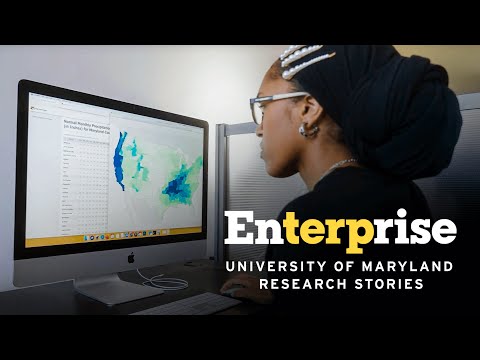
Tackling Grand Challenges: Addressing Climate Change for a Sustainable Earth

Leadership:

Ralph Ferraro headshot PI: Ralph Ferraro

Interim Director, Earth Systems Science Interdisciplinary Center

ESSIC
Timothy Canty headshot Timothy Canty

Associate Professor and Director, Marine Estuarine Environmental Sciences

CMNS
James Farquhar headshot James Farquhar

Distinguished University Professor and Chair, Department of Geology

CMNS
Tatiana Loboda headshot Tatiana Loboda

Professor and Chair, Department of Geographical Sciences

BSOS
Sumant Nigam headshot

Sumant Nigam

Professor and Chair, Department of Atmospheric and Oceanic Science, and Director, Maryland Mesonet

CMNS
Karen Prestegaard headshot Karen Prestegaard

Associate Professor, Geology

CMNS
Sujay Kaushal headshot Sujay Kaushal

Professor, Department of Geology

CMNS
Mong-Han Huang headshot Mong-Han Huang

Associate Professor, Geology

CMNS
Russell Dickerson headshot Russell Dickerson

Professor, Atmospheric and Oceanic Science

CMNS
Kara Mobley headshot Kara Mobley

Faculty Specialist, Department of Geographical Sciences

BSOS
Michael Humber headshot Michael Humber

Associate Research Professor, Department of Geographical Sciences

BSOS
James Hyde headshot James Hyde

Manager, Maryland Mesonet

CMNS

Partnerships:

Get Involved