
MPower Professor Profile: Dr. Cheryl Knott
August 31, 2022
In November of 2021, University of Maryland, College Park President Darryll J. Pines and University of Maryland, Baltimore President Bruce E. Jarrell named eight professors as the inaugural MPower Professors. This award from the University of Maryland Strategic Partnership: MPowering the State (MPower) recognizes, incentivizes, and fosters faculty collaborations between the College Park and Baltimore campuses.
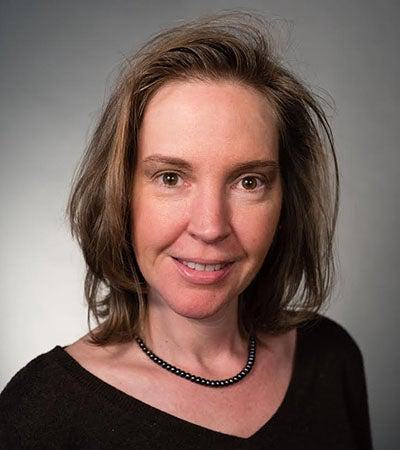
Selected for her commitment to interdisciplinary and interprofessional collaboration, University of Maryland, College Park School of Public Health professor Cheryl L. Knott’s social epidemiological research has generated over $13 million in extramural support and more than 150 peer-reviewed publications. In addition to her appointment with the School of Public Health, Dr. Knott acts as an associate professor at the School of Medicine at the University of Maryland, Baltimore, founding director of the Community Health Awareness, Messages, and Prevention (CHAMP) research lab within the School of Public Health, associate director of Community Outreach and Engagement at the University of Maryland Greenebaum Comprehensive Cancer Center, co-leader of the University of Maryland Cancer Control and Population Science Program, co-director of the Center for Health Behavior Research, and editor-in-chief of the peer-reviewed journal Translational Behavioral Medicine (TBM).
Can you briefly explain the type of research you do?
I develop and evaluate communication strategies that educate community members about cancer and encourage them to get screened for different types of cancers. I also study how social, cultural, and neighborhood factors work together to support cancer prevention behaviors and minimize behaviors that put a person at risk for cancer. Overall, my research has a focus on health disparities, social determinants of health, and the role of structural racism in health, with a particular emphasis on reducing the impact of cancer on African Americans.
We use a number of strategies to engage community members, patients, and stakeholders in our cancer education and research. These include but are not limited to Community Advisory Boards, patient advocates who join our research teams, patient advocate review of research consent forms, community research forums (discussion groups with community members and researchers), community needs assessment surveys, and community-based workshops for cancer education and reporting research findings.
We have also trained a cadre of community members to serve as Community Health Advisors. These are lay persons who may or may not have a professional health background. They complete an evidence-based training on cancer risk, prevention, and early detection and complete a knowledge examination to become certified Community Health Advisors. Once certified, the Advisors are ready to spread the word in their communities, about healthy lifestyle and finding cancer early when it is most treatable.
What drives you to do this research?
There is a tremendous need in the community to combat chronic disease, and cancer in particular. Because most cancers are in large part rooted in health behaviors, there is an opportunity through education, and behavioral and social structural change, to make a difference so that fewer people get cancer and among those who do, there can be a better rate of survivorship and quality of life.
What did it mean to you personally to be named an MPower Professor?
For myself, the MPower Professorship is a career honor and highlight because it recognizes the investment that myself and my colleagues have made over the years, in bringing the College Park and Baltimore campuses together to work on a shared mission around minimizing the impact of cancer in our communities. These two campuses have complementary strengths, and the School of Public Health, the University of Maryland Greenebaum Comprehensive Cancer Center, and the professional Schools on the Baltimore campus, all play a key role in making an impact on cancer in Maryland and beyond.
How do you collaborate with researchers outside of your discipline?
In some cases this multidisciplinary collaboration comes rather naturally, as when putting together an extramural grant proposal and identifying all areas of expertise critical to the success of a particular project. In other cases, I am tasked with bringing a community perspective to basic and clinical research in cancer. This is more challenging but I am finding good success by spending time with the faculty and learning about their research, which for me is like learning a new language. The more we communicate, we come to learn about each other’s perspectives, values, and goals. This enriches the science and makes it more impactful.
Why is this collaboration important to you?
Collaboration is critical because we are all limited in what we could accomplish on our own. When we work together, we learn new techniques and perspectives, and have an opportunity to make an impact not only in our area of study but in improving the health and well-being of our communities.
Please name the researchers you have worked with on MPower collaborations:
There are many, so this list will not be exhaustive. Collaborators from the Baltimore campus include but are not limited to Drs. Clement Adebamowo, Sally Adebamowo, Nicholas Ambulos, Toni Antalis, Maria Baer, Katherine Barry, Kevin Cullen, Christopher D’Adamo, Joanne Dorgan, Richard Eckert, Ashkan Emadi, Arif Hussain, Laundette Jones, Daniel Mullins, Rebecca Nowak, Shana Ntiri, Ebere Onukwugha, David Weber, Susan Wieland, and Ester Villalongas-Olives.
How do the funds awarded from MPower support your research and help facilitate collaborations with other researchers?
The MPower support enhances my activities in providing research mentorship and contributions to extramural grant applications; using community engagement strategies to inform research in the University of Maryland Greenebaum Comprehensive Cancer Center; and supporting bi-campus faculty recruitment efforts.
What are the next steps for your research?
I am currently working with a multidisciplinary team to expand our study of multi-level drivers of cancer risk, prevention, and screening behaviors in African Americans. This research is conducted through a lens of structural racism, with an emphasis on neighborhood-level manifestations of historical policies, which continue to negatively impact the health of community members.
To learn more about Dr. Knott’s work, visit the following links:
Community Health Awareness, Messages and Prevention (CHAMP) Lab
Population Science (PS) Program at the University of Maryland Greenebaum Comprehensive Cancer Center
Translational Behavioral Medicine: Practice, Policy, and Research (TBM) Journal